Salt air is the single biggest difference between an air conditioner in Toms River and the same unit installed forty miles inland. It is also the one most homeowners never hear about until their condenser fails years earlier than it should.
If your home sits near Barnegat Bay, along the Toms River itself, or anywhere on the barrier island, the outdoor half of your system is working in a corrosive environment every single day. Here is what is actually happening to it, and what you can do about it.
How far inland does salt air really travel?
Further than most people assume. Carrier, one of the largest HVAC manufacturers in the country, states that salt water can be carried as far as two miles inland from the coast, and recommends coastal-specific equipment for homes in that range.
Look at a map of Ocean County with that two-mile figure in mind and the picture becomes clear. Between the Atlantic on one side and Barnegat Bay cutting deep inland on the other, a very large share of Toms River, Beachwood, Pine Beach, Island Heights, Bayville and the whole barrier island falls inside that band. Seaside Heights and Lavallette are inside it several times over.
Prevailing wind matters too. A house with an unobstructed easterly exposure to the bay collects more salt than a house of the same distance sheltered behind a tree line and other buildings. Two neighbors on the same street can see noticeably different rates of wear.
What salt actually does to your condenser
Salt does not simply sit on the metal. Once a salt film absorbs moisture out of humid coastal air, it becomes an electrolyte, and that is where the damage starts.
Galvanic corrosion
A traditional condenser coil pairs copper refrigerant tubing with aluminum fins. Copper and aluminum are two dissimilar metals in direct contact. Add a conductive salt solution and you have completed a small battery: an electrical current flows between the metals and the aluminum, being the less noble of the two, corrodes away.
You see this as white powdery deposits and crumbling fins. As fins deteriorate, the coil loses surface area, heat transfer drops, head pressure rises, and the compressor works harder for less cooling. This is why coastal systems often show climbing energy bills long before they actually break down.
Manufacturers have responded to this. Carrier, for example, now uses all-aluminum welded coil construction on some product lines specifically to remove the dissimilar-metal contact that drives galvanic corrosion, and claims a substantially longer projected coil life as a result.
Formicary corrosion
The second mechanism is less visible and more damaging. Formicary corrosion, sometimes called ant-nest corrosion, attacks the copper tubing itself, driven by organic acids rather than salt directly. It tunnels microscopic channels through the tube wall and produces pinhole leaks.
The frustrating part is that a coil suffering formicary corrosion can look almost normal from the outside. What you notice is a system that slowly loses refrigerant, cools less well each season, and needs topping up more and more often. Each top-up is money spent on refrigerant that is going to leak out again.
The cabinet, the fasteners and the electricals
Corrosion is not limited to the coil. Cabinet panels rust through at the seams. Screws and mounting hardware seize or snap. Contactor points pit, and the electrical connections inside the disconnect box oxidize. On coastal jobs we regularly find units where the refrigerant circuit is still sound but the electrical components have quietly degraded.
Six things that genuinely extend a coastal system’s life
1. Rinse the outdoor coil with fresh water
This is the highest-value thing a homeowner can do, and it costs nothing. Shut the power off at the disconnect, then rinse the condenser coil thoroughly with a garden hose on a gentle setting, working from the inside out where you can reach. Fresh water dissolves and carries away the salt film before it can do its work.
Once a month through the cooling season is a reasonable rhythm for a home close to the water. Never use a pressure washer: the fins are thin aluminum and will fold flat, which causes exactly the airflow restriction you are trying to avoid.
2. Specify corrosion-resistant equipment when you replace
When the time comes for a new system, coastal construction is worth asking about specifically. That can mean all-aluminum coils, factory-applied protective coil coatings, multi-layer cabinet finishes and heavier zinc plating on hardware. Some manufacturers also offer a separate seacoast corrosion warranty on residential equipment, which is worth reading closely before you choose a brand.
The premium for coastal-rated equipment is modest set against replacing a condenser several years early.
3. Think about where the unit sits
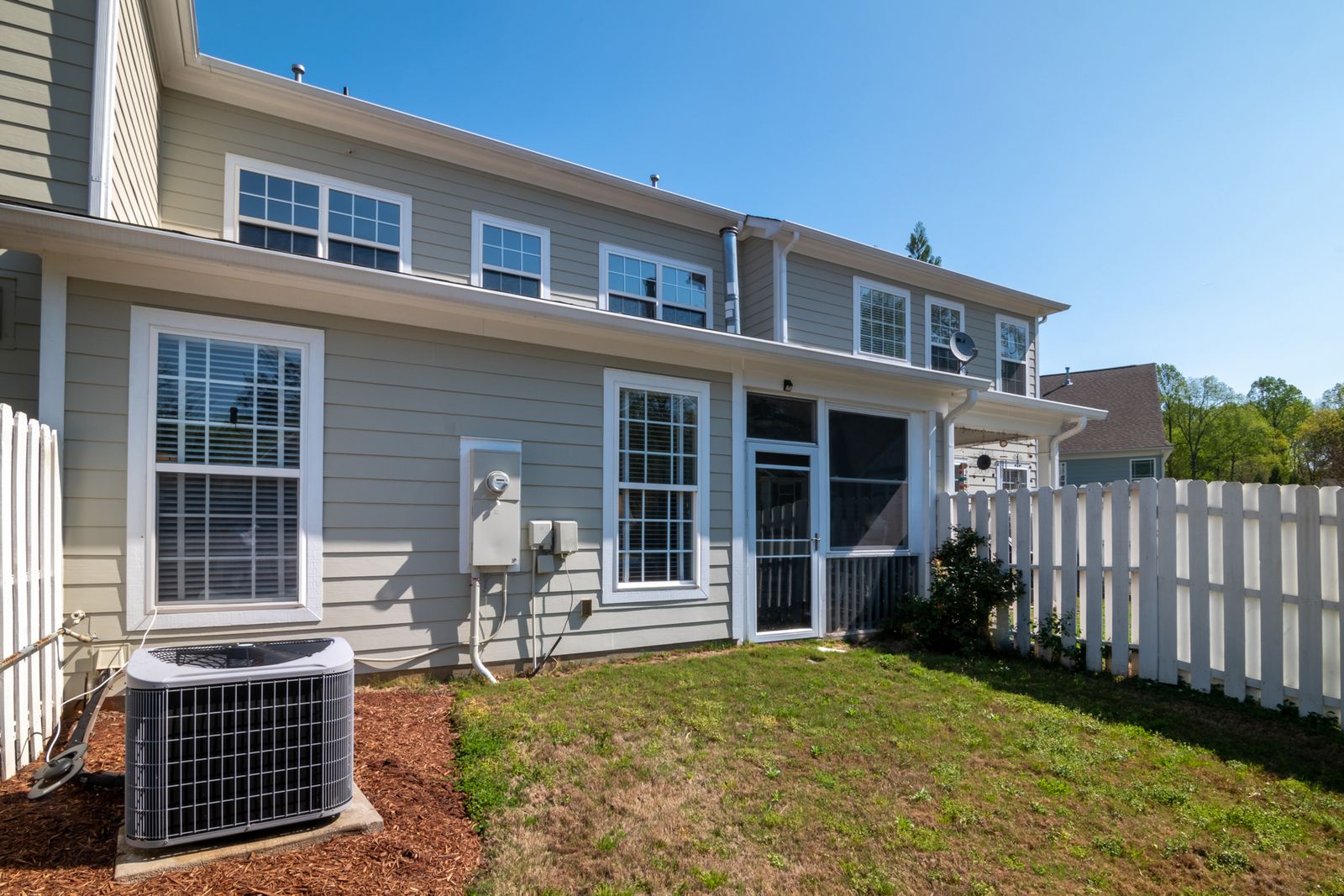
Placement is free at installation and expensive to change afterwards. On a windward elevation facing open water, a condenser takes the full salt load. Moving it to a sheltered side of the house, or putting a screen or fence between it and the prevailing wind, reduces exposure considerably, as long as the required airflow clearances around the unit are respected. Blocking airflow to protect against salt is a bad trade.
4. Keep it off the ground and out of the spray
Ocean County homes often sit on elevated lots or on pilings after the post-Sandy rebuilds. Mounting the condenser on a raised pad or bracket keeps it clear of splash, standing water and the salt-laden sand that blows around at ground level. In flood-prone zones there may be elevation requirements in any case, so check what applies to your property.
5. Have the coil professionally cleaned each year
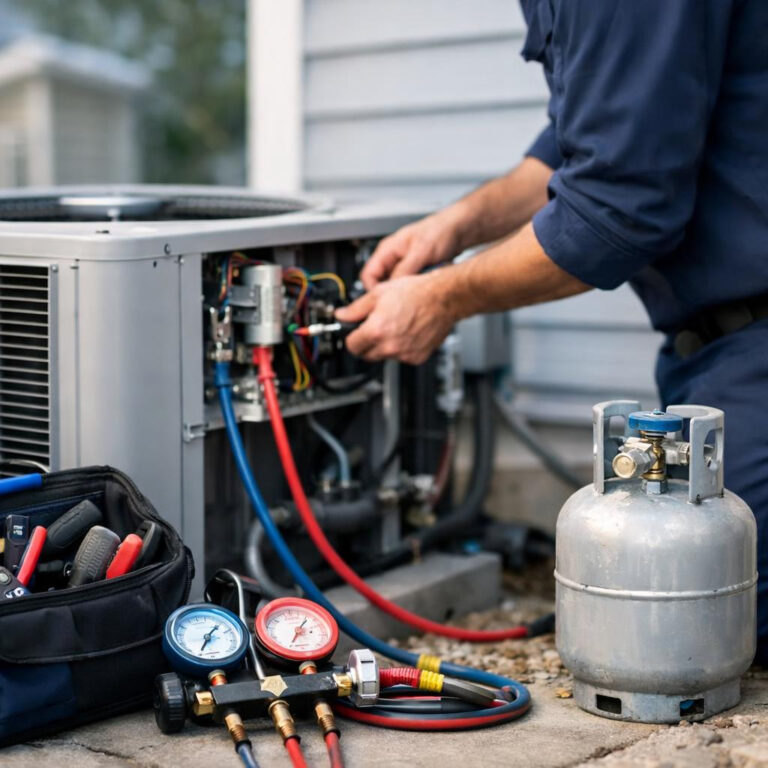
A homeowner rinse handles the surface. A technician can open the unit, clean between the fin rows with a proper coil cleaner, comb out bent fins, check the electrical contacts for pitting and measure whether the system is losing refrigerant. On coastal installations this is not a luxury, it is what keeps the compressor alive.
6. Take small refrigerant losses seriously
If your system needed refrigerant last summer and needs it again this summer, you do not have a system that is a little low. You have a leak. With refrigerant supply tightening under federal phase-down rules, repeatedly topping up a leaking coastal system is getting more expensive every year, and it is worth having the leak properly located and a replace-or-repair decision made on the facts.
Is it worth it?
A fair question. Coastal maintenance takes effort, and the honest answer is that no amount of care makes salt air stop being salt air.
What care does is change the failure from premature to normal. A neglected condenser in a windward bayfront location can lose its coil in a handful of seasons. The same unit, rinsed regularly, professionally serviced and specified for coastal duty, has a realistic shot at a full service life. That is the difference the work buys, and on a system costing several thousand dollars to replace, it pays for itself comfortably.
Living near the water in Ocean County?
We work on coastal systems across Toms River, Beachwood, Bayville, Island Heights, Pine Beach, Seaside Heights, Lavallette and the surrounding communities every week, and we know what salt exposure looks like at each stage. If your outdoor unit is showing white deposits, crumbling fins, rust at the cabinet seams, or if it keeps needing refrigerant, it is worth having someone look at it properly before the compressor makes the decision for you.
Get in touch for an inspection, or read more about our heating and cooling services and see recent work across New Jersey.