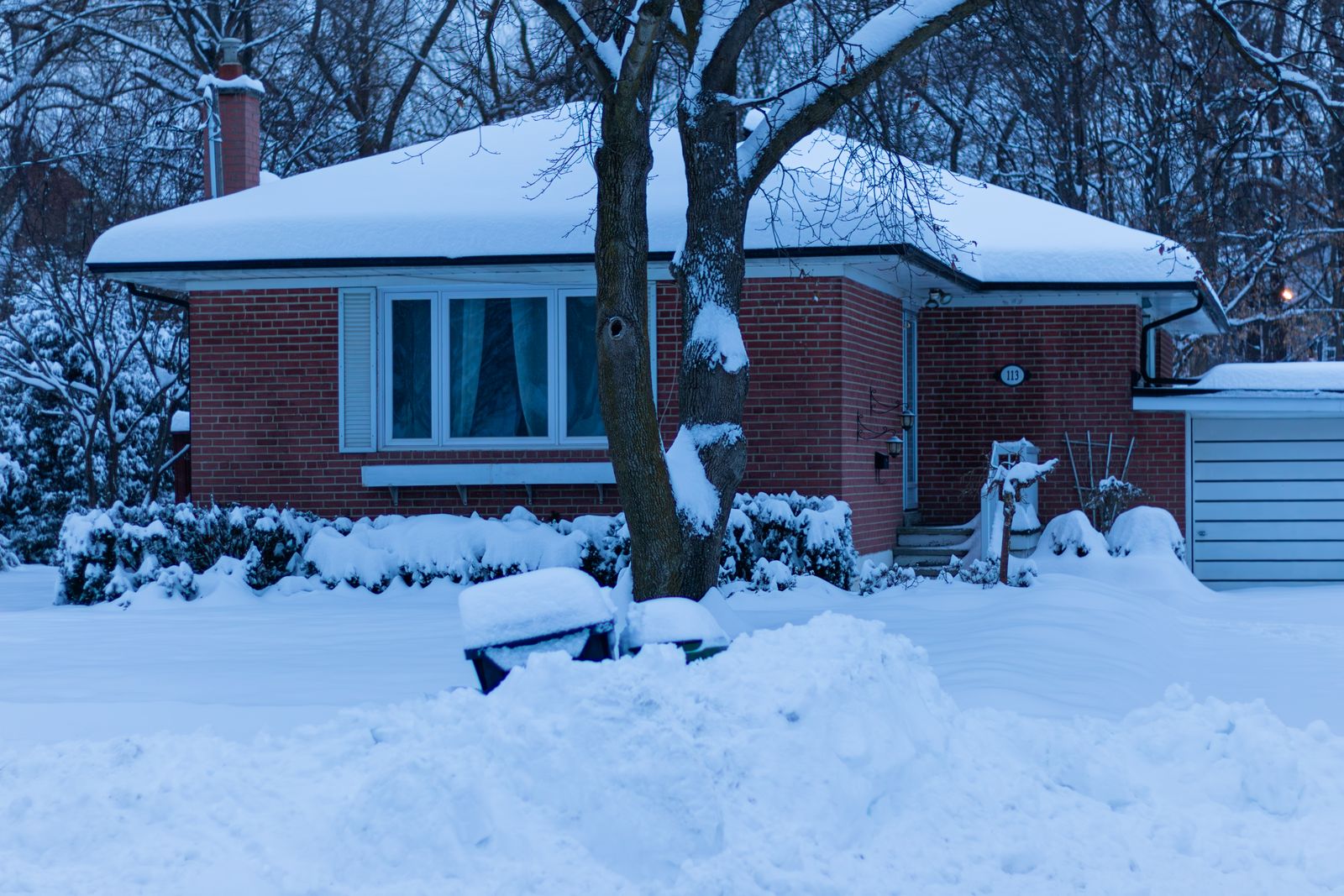
Ocean County gets a genuinely demanding climate for heating equipment, and the demand is not where most people assume. It is not that our winters are severe. It is that they are long, damp and changeable, which is a different kind of hard on a furnace.
Here is a month-by-month plan for getting a system through a Jersey Shore winter without a 2 a.m. failure, written for the way heating actually behaves in this part of New Jersey.
What our winter actually asks of a heating system
The design figure worth knowing is Ocean County’s 99% heating design temperature: 14°F. That is the benchmark a properly sized system is built to handle, meaning it should hold your setpoint even on the coldest stretch of a normal winter.
But a design temperature only describes the extreme. Most of our heating season is spent in the 30s and 40s, and that is where the real wear happens. A furnace in Toms River does not run flat out for three months the way one in Vermont does. It cycles on and off constantly through a long shoulder season that runs from October into April.
Cycling is what wears components out. Ignitors, flame sensors, pressure switches and blower motors are all stressed most by starting and stopping, not by running. Add coastal humidity, which accelerates corrosion on flue components and electrical contacts, and you have a climate that quietly ages equipment through repetition rather than severity.
This is also why an oversized furnace is a real problem here rather than a theoretical one. Too much capacity means shorter, more frequent cycles, which means more wear, less even temperatures and, on a condensing furnace, less time spent in the efficient condensing mode you paid for.
September and October: do this before you need heat
Change the filter, and note the date
The cheapest maintenance there is, and the most commonly skipped. A clogged filter restricts airflow, which makes the heat exchanger run hotter than designed and can trip the high-limit switch. On a furnace it is a leading cause of avoidable no-heat calls.
A one-inch pleated filter generally wants changing every 60 to 90 days, sooner with pets or if anyone in the house has allergies. Media filters four or five inches deep typically run six months to a year. Write the date on the frame in marker; nobody remembers otherwise.
Run the heat before you depend on it
On a mild day in early fall, turn the thermostat up until the furnace fires and let it run for fifteen or twenty minutes. You are checking that it ignites promptly, that the burner stays lit, that air comes out warm, and that it shuts down cleanly.
There will be a smell of burning dust on the first run. That is normal and clears within a few minutes. What is not normal is a delayed ignition with a small boom, repeated ignition attempts, a burner that lights and cuts out, or any grinding or squealing from the blower. Find that out in October, when you can schedule a repair, rather than in January when you cannot.
Book the annual service
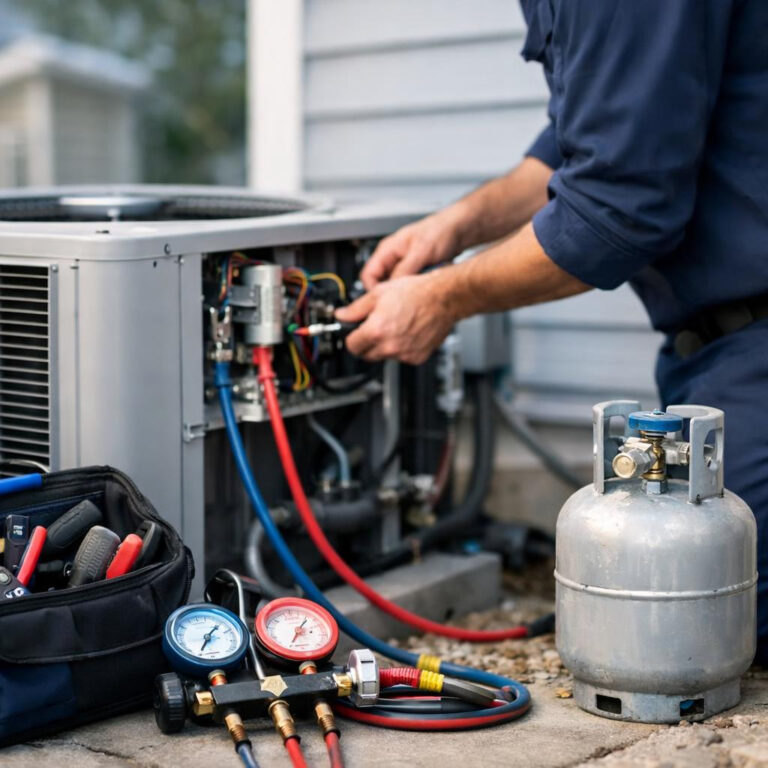
A proper heating service includes cleaning and inspecting the burners, checking the heat exchanger for cracks, testing the flame sensor and ignitor, verifying gas pressure and combustion, checking the flue for obstruction and corrosion, testing safety switches and inspecting the blower.
The heat exchanger inspection is the one that matters most for safety. A cracked heat exchanger can let combustion gases into your supply air, and carbon monoxide is not something you detect by smell. This is the part of the job that justifies the whole visit.
September and October are when appointment slots are available. By the first hard freeze, every heating contractor in the county is running emergency calls and routine maintenance moves to the back of the line.
Test your carbon monoxide alarms
Any home with a fuel-burning appliance needs working CO alarms. Press the test button on each one. Replace the batteries. Check the manufacture date on the back: CO sensors degrade and most units need replacing every five to seven years regardless of whether they still beep.
This takes five minutes once a year and is the single most consequential thing on this list.
November: seal the leaks that cost you all winter
Ducts first
If your ductwork runs through an unconditioned attic or crawl space, as a great deal of it does in this area, leaks there are pure loss. Air you paid to heat is being delivered to a space you do not occupy.
Look at accessible joints for disconnected sections, torn flex duct and old fabric tape that has dried out and let go. Mastic or foil-backed tape is the correct repair. Standard duct tape, despite the name, fails on ducts.
The envelope
Weatherstrip doors, seal obvious gaps around window frames, and pay attention to the penetrations people forget: where pipes and cables enter the house, around recessed lights, and the attic hatch, which is frequently the largest single air leak in a home.
None of this is glamorous and all of it reduces what your furnace has to do.
Check the vents
Walk the house and make sure supply and return vents are not blocked by furniture, rugs or curtains. Closing vents in unused rooms is a popular idea that usually backfires: it raises static pressure across the system, which strains the blower and can reduce overall airflow rather than redirecting it usefully.
December through February: the things that go wrong mid-season
Keep the outdoor equipment clear
If you have a heat pump, the outdoor unit needs clear airflow and needs to drain during its defrost cycle. Keep snow away from it, and do not let it sit in a pool of meltwater that refreezes.
On a high-efficiency condensing furnace, the PVC intake and exhaust pipes usually exit through a sidewall. These must stay clear. Snow drifting against them, or ice building up at the terminations, will shut the furnace down on a pressure switch fault, and it tends to happen at exactly the worst moment. After heavy snow, check them.
Watch for the early warnings
A furnace that is failing usually announces it. Short cycling, uneven temperatures between rooms, a burner that takes several attempts to light, new noises, or a sudden jump in gas usage against similar weather are all worth a call before they become a breakdown. Our guide to the five signs your HVAC system needs repair goes through these in detail.
Set the thermostat and leave it alone
Large setbacks and big manual swings cause more problems than they solve, especially with a heat pump, where a big recovery can pull in expensive auxiliary electric heat. A modest, consistent schedule is more efficient and easier on the equipment than dramatic adjustments.
If the house is empty
Ocean County has a lot of seasonal property, and a vacant house in winter is a burst-pipe risk. Never set the heat below 55°F. If you can, have someone check the property periodically, and consider a thermostat or sensor that will alert you remotely if the temperature drops. A heating failure discovered in April is a very different repair bill from one discovered the next day.
March and April: close the season properly
When you stop needing heat, change the filter again, note anything that was not quite right over the winter while you still remember it, and book the cooling service before the first warm spell. The same backlog that forms in January forms again in June.
A short honest note on what maintenance does and does not do
Annual service does not make a furnace last forever, and it will not prevent every failure. Components fail sometimes without warning.
What it does do is catch the failures that give warning, which is most of them, and it catches the safety issues that give no warning at all. A cracked heat exchanger or a blocked flue found during a routine inspection in October is a repair. Found in January because someone got a headache, it is something else entirely.
Heating service across Ocean County
We handle heating maintenance, repairs and replacements throughout Toms River, Brick, Lakewood, Jackson, Manchester, Berkeley, Bayville, Forked River and the surrounding communities. If your system struggled last winter, fall is the right time to deal with it rather than the middle of a cold snap.
Schedule a heating service or read more about our heating and cooling services.