If you have been putting off a heating or cooling upgrade because you were waiting for the federal tax credit, there is something you need to know: it is gone.
The 25C Energy Efficient Home Improvement Credit, the one that gave homeowners up to $2,000 back on a qualifying heat pump, ended on December 31, 2025. The IRS is explicit about it. The credit applies to qualifying property placed in service before that date, and nothing after.
A lot of websites have not caught up. You will still find pages, including some official-looking ones, describing the credit as running through 2032. That was the plan before the law changed. It is no longer accurate, and it matters, because a homeowner budgeting a project around a $2,000 credit that no longer exists is going to be unpleasantly surprised at tax time.
The good news is that the federal credit was never the only money on the table in New Jersey, and the programs that remain are the ones that were always the most generous here.
What is still available to Toms River homeowners
Utility rebates through your energy provider
Most of Ocean County, Toms River included, is served by JCP&L for electricity. JCP&L runs residential HVAC equipment rebates through New Jersey’s Clean Energy Program, and these are paid directly on qualifying equipment.
As published at the time of writing, the residential HVAC rebates include:
- Air source heat pumps: $500 to $1,000 depending on efficiency tier, with the highest amount reserved for cold-climate rated equipment
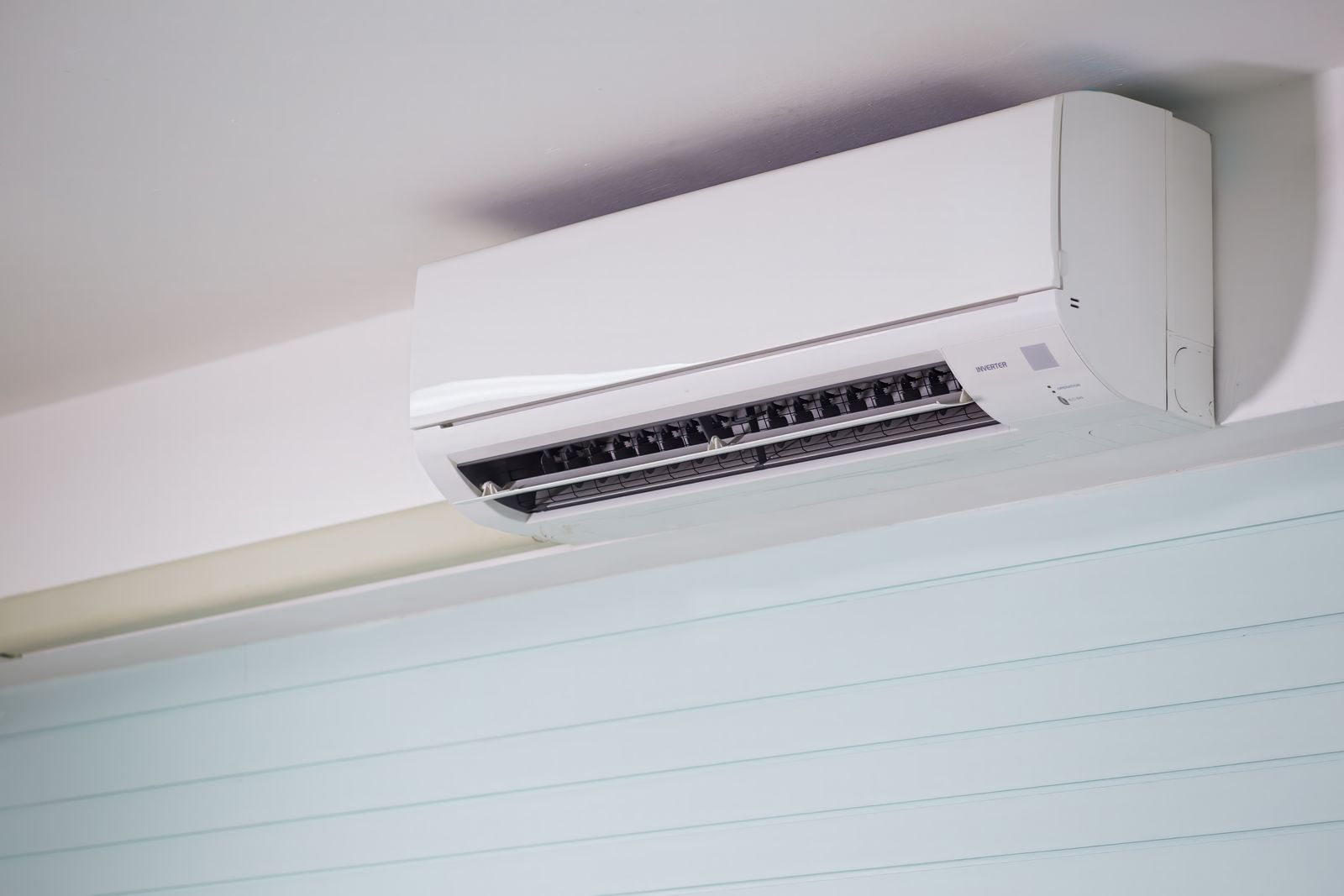
- Ductless mini split heat pumps: around $750 for qualifying high-efficiency units
- Central air conditioners: $100 to $200 depending on efficiency tier
- Furnace fans: around $100 for electronically commutated motors
These amounts are tied to specific efficiency thresholds measured in SEER2, EER2 and HSPF2. The equipment has to meet the threshold exactly, which is why the model you choose matters as much as the category. A heat pump one tier below the cut-off gets you nothing.
Rebate amounts and qualifying thresholds are revised periodically, so confirm the current figures before you commit to a project. Your contractor should be doing this as a matter of course.
New Jersey’s Clean Energy Program whole-home incentives
Beyond equipment rebates, New Jersey runs whole-home programs that combine an energy assessment with incentives on the improvements it recommends, and these can be worth considerably more than a single equipment rebate. The structure typically pairs insulation and air sealing with heating and cooling upgrades, on the reasoning that a right-sized system in a leaky house is still a leaky house.
Income-qualified households have access to higher incentive levels and in some cases to low-cost or zero-interest financing. If your household might qualify, it is worth checking before assuming you do not.
Financing rather than rebates
Zero-interest and low-interest financing on qualifying efficiency upgrades has been a consistent feature of New Jersey’s programs. For a homeowner facing an unexpected system failure, spreading the cost at no interest is often worth more in practice than a rebate check several months later.
How to actually get the money
Rebate programs are lost more often on paperwork than on eligibility. A few things make the difference.
Check eligibility before you buy, not after
This is the one that catches people. Most programs require the equipment to meet the efficiency threshold on the date of installation, and many require the application within a set window after the work is completed. Once a non-qualifying system is installed, there is no retroactive fix.
Keep the full paper trail
You will generally need the itemized invoice showing equipment model numbers, the AHRI certificate for the matched system, proof of payment and your utility account details. Ask your contractor for the AHRI certificate specifically. A matched indoor and outdoor unit has a combined rating that can differ from the rating of either component alone, and the certificate is what proves the combination qualifies.
Ask who files the application
Some contractors handle rebate paperwork for you, some hand you a form, and some do nothing at all. It is a fair question to ask during the estimate, and the answer tells you something about how the company operates.
What this means for the decision in front of you
The end of the federal credit changes the arithmetic on heat pumps in particular. A heat pump was a more expensive purchase than a straight furnace-and-AC replacement, and the $2,000 credit did a lot of work closing that gap. Without it, the case rests on the state and utility incentives plus the running-cost savings, which is a real case but a narrower one.
That does not make a heat pump the wrong answer in Ocean County. Ocean County’s winter design temperature is 14°F, which is well inside the range where a properly specified cold-climate heat pump holds full capacity, and our summers are moderate by national standards. The technology suits this climate. It simply means the decision now deserves an honest side-by-side comparison of installed cost and projected running cost for your particular house, rather than a rebate-driven shortcut.
If you are weighing options, our guide to central air versus mini split systems covers the practical differences between the two approaches.
A word of caution about rebate figures online
Incentive programs change more often than the internet updates. Dollar amounts, efficiency thresholds and application deadlines all move, sometimes mid-year, and program funding can pause when allocations run out.
Treat any figure you read, including the ones above, as a starting point rather than a promise, and verify the current terms directly with the program or through a contractor who works with them regularly. Anyone who quotes you a rebate amount with total certainty and no caveats is telling you something about how carefully they follow these programs.
Planning an upgrade in Toms River or Ocean County?
We work with New Jersey’s incentive programs regularly and can tell you what a given piece of equipment actually qualifies for before you commit to it, rather than after. Request a free estimate or take a look at our installation and replacement services.
Information verified September 2026. Federal tax credit status confirmed against IRS guidance. Utility rebate amounts reflect published New Jersey Clean Energy Program figures at the time of writing and are subject to change.